
2026-09-09
Building a veterinary workplace people want to stay in
Recruiting veterinary professionals is difficult. Keeping them can be just as hard.
It's something we hear repeatedly from independent clinics across the VetFamily community, and it is reflected in our member surveys. But solving the challenge takes more than attracting more people into veterinary medicine. We also need to look at what happens once they get there.
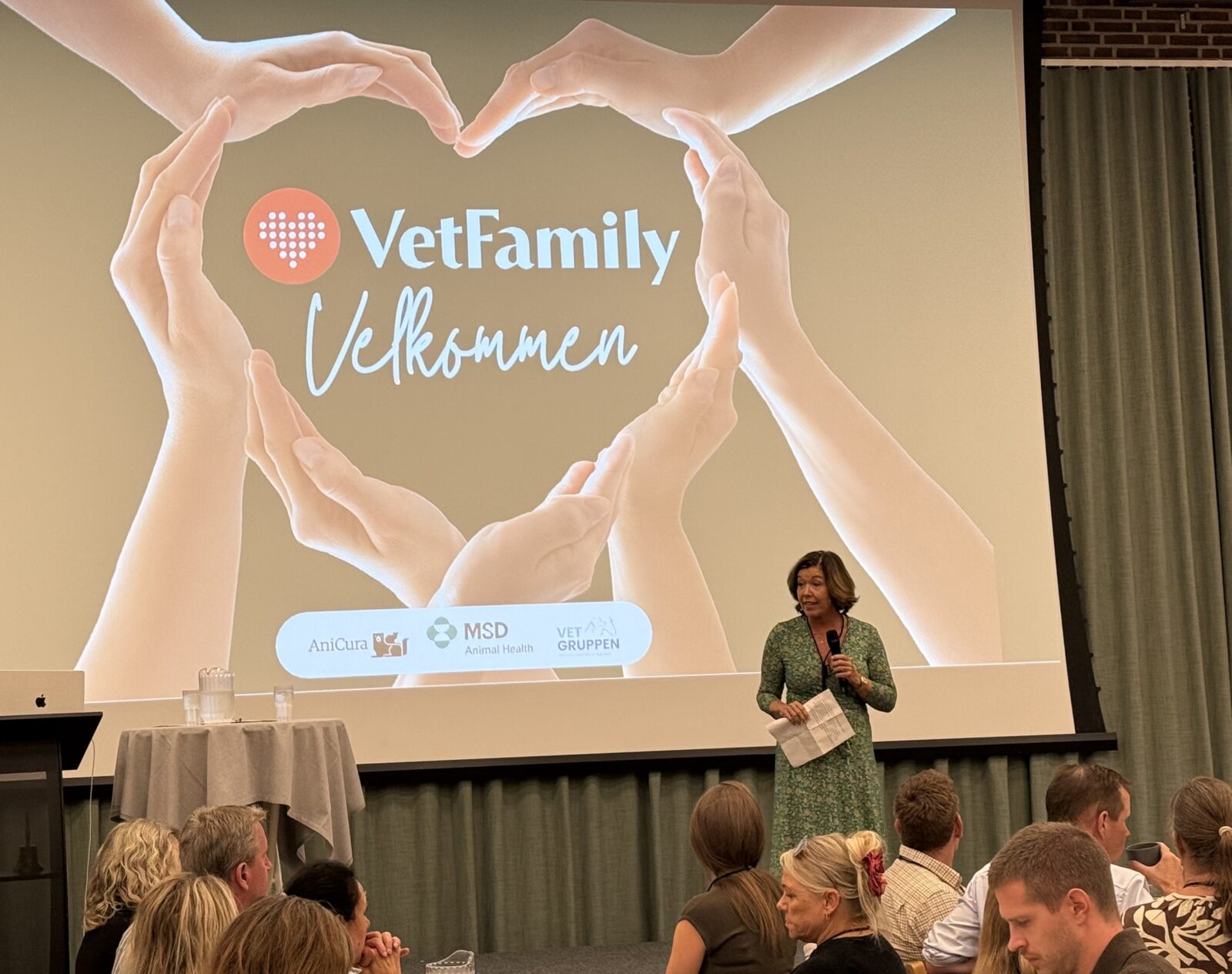
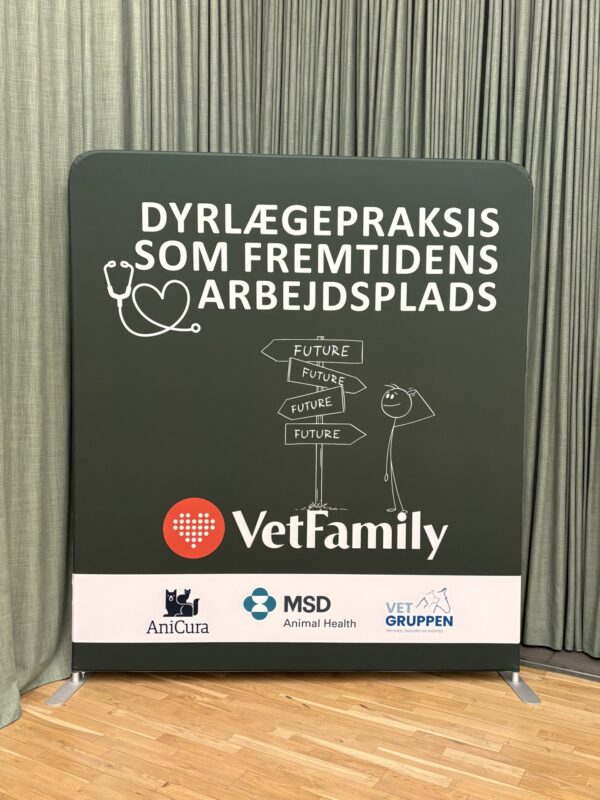
That was the starting point when VetFamily brought together around 150 people in Denmark on September 8 for Dyrlægepraksis som fremtidens arbejdsplads – Veterinary Practice as the Workplace of the Future.
Clinic teams, veterinary students and others from across the industry came together at Hotel Nyborg Strand to talk openly about recruitment, retention, onboarding, leadership, workload and wellbeing. And, importantly, about what we can actually do differently. The conference was organised by VetFamily in collaboration with MSD Animal Health, AniCura and VetGruppen.
We can't solve everything with resilience
Veterinary medicine can be an incredibly rewarding profession. It can also be demanding in ways that aren't always visible from the outside.
A veterinary professional can move from welcoming a new puppy into the clinic to supporting a family through euthanasia within the space of an hour. They need to manage the animal's medical needs, the owner's emotions and their own response, while remaining professional and moving on to the next patient.
One of the strongest messages from the conference was that we cannot make veterinary workplaces sustainable simply by asking individuals to become better at coping.
People have a responsibility to speak up when something isn't working. But clinics also have a responsibility to create an environment where support is available, learning is part of everyday work, and there is room to process difficult experiences.
As Annette Bernth, Country Manager for VetFamily Denmark, puts it: "We can't ask individual veterinary professionals to carry the burden alone. If we want people to choose veterinary practice, and want to stay, we have to build support, learning and room for reflection into everyday clinic life. That's not an extra wellbeing initiative. It's part of running a good veterinary practice."
What happens when a new vet walks through the door?
One area where clinics can make a very practical difference is onboarding. Dr. Dave Nicol, founder of Veterinary Leadership Academy, challenged participants to think about how clinics develop newly graduated veterinarians into confident professionals.
His message was straightforward: don't leave it to chance.
Someone needs clear responsibility for the new colleague's development. The clinic needs to make time for it. Expectations need to be introduced gradually rather than assumed. Help needs to be available when it is actually needed. And professional progression should be planned.
An interesting discussion emerged around the language we use. A student finishes university qualified. The industry receives them as newly qualified.
That small difference can hide a much bigger expectations gap. What does the new veterinarian expect to be able to handle on day one? What does the clinic expect? What should university have prepared them for, and where does the clinic's responsibility begin?
The discussion highlighted that a newly qualified veterinarian needs solid foundations, but cannot reasonably be expected to master every advanced treatment immediately. Knowing when to ask for help and how to find new knowledge are themselves important professional skills.
"Why I left practice"
Perhaps the most powerful perspective of the day came from Mia Benthin Thøisen. Mia qualified as a veterinarian in 2020. In January 2026, she left clinical practice. In a conversation with Charlotte Fersløv from MSD Animal Health, she spoke openly about why.
She described the constant shifts between demanding clinical and emotional situations. Being alone on call as a relatively new veterinarian and feeling guilty about contacting a colleague who was off duty. The fear of making mistakes. Too little opportunity to pause after difficult consultations. And the feeling that work continued in her head long after she had gone home.
What might have made a difference?
Mia pointed to surprisingly practical things: planned breaks, a mentor who was clearly available when needed, and greater openness about the emotional demands of veterinary work. She also highlighted the need to better prepare new veterinarians for the business realities of practice, including conversations with clients about the cost of care.
Her story made the recruitment and retention challenge very real. Because attracting another veterinarian into the profession doesn't solve the problem if someone else decides they can no longer stay.
Small changes can change the working day
There was no suggestion during the conference that there is one simple solution. But there were plenty of things clinics can do.
Christian Harpelund explored how teams can create small spaces between emotionally demanding experiences: a quick debrief after a difficult case, making support immediately accessible, introducing new colleagues to how the clinic handles challenging situations, and creating a culture where even experienced colleagues can say, "That one affected me."
Morten Resen brought another perspective to the discussion: workplaces cannot make everyone happy, and individuals also have a responsibility to communicate when something isn't working. A manager or colleague cannot know what someone needs if it is never expressed.
The two perspectives aren't contradictory. People need to speak. And workplaces need to make it safe to do so.
A challenge the whole industry needs to work on
The conference brought together people from VetFamily member clinics, students and others across veterinary medicine. We also organised the day together with MSD Animal Health, AniCura and VetGruppen. That matters.
Recruitment, retention and wellbeing aren't challenges any one clinic, veterinary group or organisation can solve alone. They affect the whole profession, and improving veterinary workplaces requires conversations and collaboration beyond our own organisations and communities.
For VetFamily, that's part of our responsibility. We spend a lot of time talking with independent clinics about the realities they face. When those clinics consistently tell us that finding and keeping great people is one of their biggest challenges, we need to do more than acknowledge it. We need to help move the conversation forward, and turn it into practical action.
As Annette says: "We talk a lot as an industry about the shortage of veterinary professionals. But recruitment is only half of the equation. If we want more people to choose this profession and build long careers in it, we also have to be willing to improve what it feels like to work in practice. That's something clinics, universities and the wider industry all have a role in."
There will always be demanding days in veterinary medicine. Difficult cases, emotional conversations and pressure are part of a profession built around caring for animals and the people who love them.
The goal isn't to pretend we can remove all of that. It's to build veterinary workplaces where people have the leadership, support, development and colleagues around them to handle it. And where they can continue enjoying a profession they once chose for a reason.
Because the future of veterinary medicine depends not only on bringing great people into the profession. It depends on giving them good reasons to stay.
By bringing independent clinics, corporate veterinary groups and industry partners together, we can work across traditional boundaries on one of the most important challenges facing our profession: creating veterinary workplaces where people want to stay and thrive.